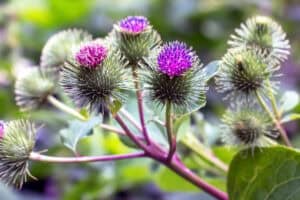
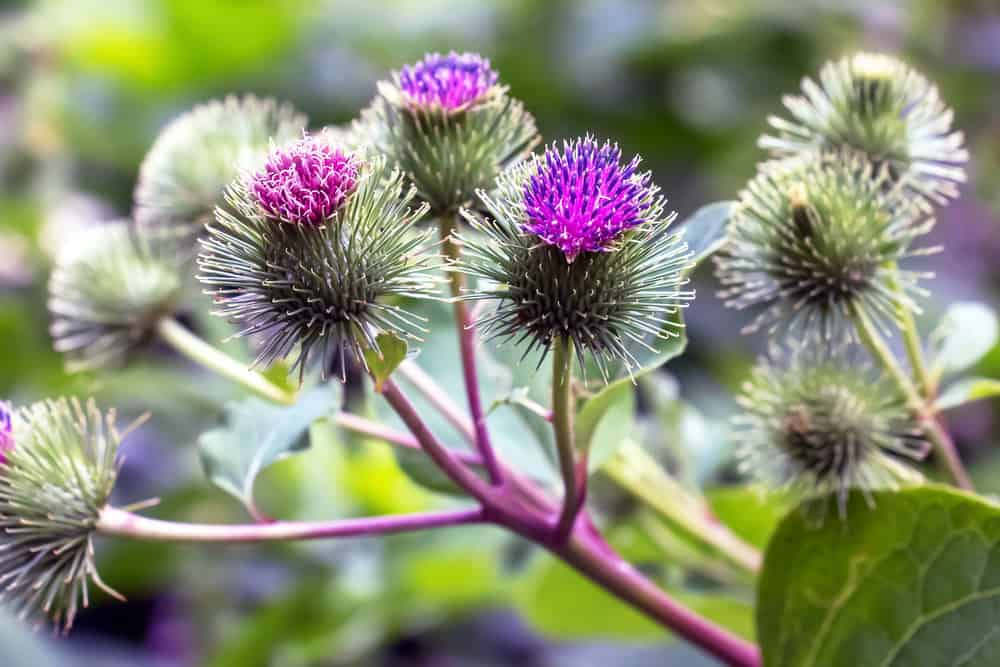
If you’ve ever walked through a field and had burrs cling stubbornly to your clothes, you’ve already met burdock—a plant most people dismiss as a nuisance weed. Yet, to those who know its virtues, burdock root stands as one of nature’s most dependable allies for cleansing, nourishing, and restoring balance in the body.
Like lobelia, burdock is both common and extraordinary. It hides in plain sight, yet once you understand its power, you’ll see why it has been treasured in European, Asian, and American herbal traditions for centuries.
A Brief History of Burdock
Burdock (genus Arctium) grows abundantly across Europe, Asia, and North America. Its reputation as a healing herb goes back thousands of years.
- Traditional Chinese Medicine has used burdock seed (Niu Bang Zi) for centuries to “disperse wind-heat” and relieve sore throats, skin eruptions, and colds.
- In European folk medicine, the root was valued as a blood purifier, liver cleanser, and skin remedy. It was a mainstay in spring tonics—formulas meant to awaken the body after a long winter.
- In Native American herbal practice, burdock root was often decocted for skin ailments and as a nourishing tonic.
By the Middle Ages, burdock was already well-known in apothecaries. Monastic herbalists recorded its virtues for “cleansing the humors,” while country healers used it in poultices for wounds, ulcers, and boils.
In modern times, burdock entered the spotlight through formulas like the Hoxsey cancer remedy and the Canadian Essiac tea, where it was included as a key detoxifying and nutritive ingredient. Across centuries and continents, its consistent theme has been purification, nourishment, and renewal.
The Uses of Burdock
Burdock root’s usefulness is wide-ranging. It shines in four main categories:
1. A Master Blood Cleanser
Old herbalists often referred to burdock as a “blood purifier.” While we don’t often use that phrase today old-fashioned, modern science confirms that burdock stimulates the liver and kidneys (the main blood filtration organs), promoting detoxification pathways. It helps remove metabolic waste, supports bile production, and assists the body in clearing toxins through the skin and urine. This makes it valuable in cases of acne, eczema, psoriasis, boils, and other conditions where impurities are pushed out through the skin.
2. Skin Healer
Because of its cleansing action, burdock has long been prized as a skin herb. Taken internally, it works from the inside out to clear chronic skin eruptions. Used externally in washes, compresses, or salves, it soothes inflammation and promotes healing of wounds, rashes, and even stubborn ulcers.
3. Digestive and Prebiotic Support
The root contains inulin, a soluble fiber that nourishes beneficial gut bacteria. This makes burdock both a digestive aid and a metabolic regulator. By feeding the microbiome, it helps balance blood sugar, improve digestion, and enhance immunity.
Many don’t realize that burdock root is also a food in Japan (called gobo). It is stir-fried, pickled, or simmered, offering both nutrition and medicinal benefit in everyday meals.
4. Joint and Lymphatic Ally
By reducing systemic toxins and inflammation, burdock root indirectly eases arthritic pain and supports lymphatic flow. In old herbal practice, burdock was often paired with yellow dock or sarsaparilla to move lymph and relieve “stuck” conditions.
Surprising Facts About Burdock
Even seasoned herbalists sometimes overlook these fascinating aspects of burdock:
1. The Velcro Connection
In the 1940s, a Swiss engineer named George de Mestral noticed how burdock burrs clung to his dog’s fur. He studied their hooked bristles under a microscope and used the design to invent Velcro. So, every time you open and close a Velcro strap, you’re using an invention inspired by burdock!
2. Rich In Minerals
Burdock root is high in potassium, magnesium, manganese, and calcium, making it not only cleansing but deeply nourishing. Herbalists often emphasize that true detoxification requires both removing waste and replenishing nutrients—burdock does both!
3. The Velcro Connection
Burdock has attracted attention for its antioxidant and anti-proliferative compounds. Its inclusion in Essiac tea reflects a tradition of using it in chronic illness. Some studies suggest it may help protect cells from damage and reduce tumor growth in animals. While more research is needed, this points to its long-standing reputation as a systemic restorer.
Unlocking Burdock’s Power
To fully benefit from burdock, keep these keys in mind:
- Consistency Over Time
Burdock root works best when taken consistently over weeks. Think of it as a long-term ally rather than a quick fix. A daily tea, tincture, or cooked root gradually shifts the terrain of the body toward health. - Use It as Food
Try incorporating burdock root into meals. Simmer it in soups, roast it with vegetables, or sauté it with sesame oil. This way, you receive both its nutritive and medicinal gifts. - Pairing With Other Herbs
Burdock combines beautifully with yellow dock, dandelion, and red clover for cleansing formulas. For skin issues, pair it with sarsaparilla or echinacea. For digestion, use it alongside ginger or fennel. - Fresh Is Best
If you can harvest fresh burdock root in the fall of its first year, you’ll find it tender, juicy, and potent. Older roots become woody and lose some of their medicinal value.
Conclusion
The next time you see burdock along a roadside or in a pasture, remember that beneath its prickly burrs lies a root of extraordinary value. Where others see it as a nuisance, herbalists see it as a treasure.
Burdock root embodies the truth that healing often comes from humble, overlooked places. It doesn’t dazzle with instant effects; it transforms steadily, deeply, and reliably. By cleansing, nourishing, and supporting the body from the ground up, it helps restore harmony in ways few herbs can match.
In the words of the old European proverb: “Burdock clears the blood and clears the way.”